Double-End Stud
machinery and flange joints; dimensions by drawing
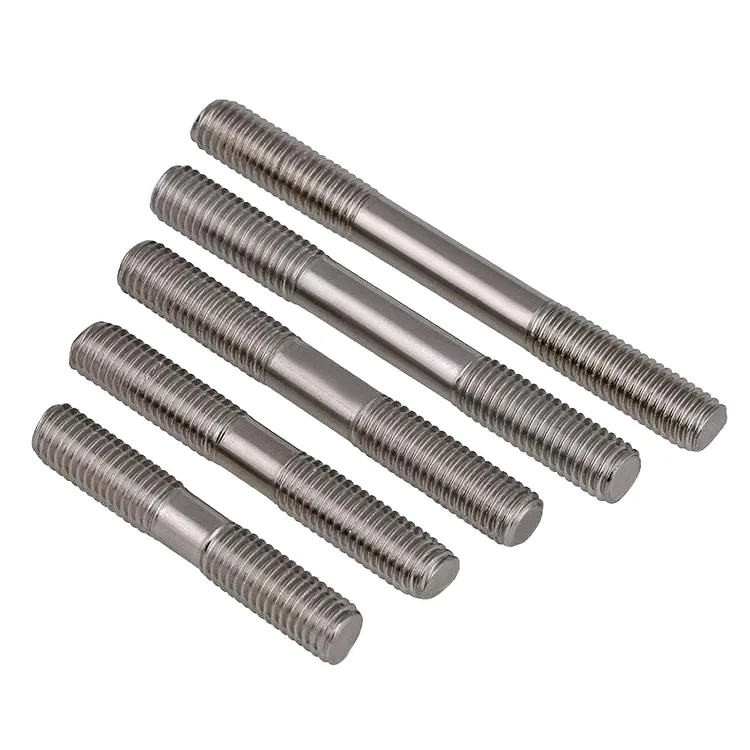
A double-end stud has threads at both ends with a plain shank between them. One end can engage a tapped housing or flange while the other accepts a nut, or the two ends can connect separate parts according to the assembly design. Typical uses include machinery housings, flanges, equipment and repair connections.
Define every length
In addition to overall length, show the thread length at each end, plain-shank length, diameter, pitch, end condition and thread tolerance. When the ends use different threads, a dimensioned drawing should identify each side so they cannot be reversed during quotation.
What to send with the RFQ
Provide the drawing or product standard, overall length, thread length at each end, shank length, diameter and pitch, engagement requirement, material or property class, finish, quantity, packaging and inspection documents. Tolerances and production capability are confirmed per enquiry.
How it differs from threaded rod
Read double-end stud vs fully threaded rod for the practical differences. When the name is uncertain, a drawing is safer than a shorthand description such as “standard stud.”