How Chemical Anchors Work and Common Application Scenarios
Chemical anchors firmly bond threaded rods to concrete substrates through chemical resin, and can be used in steel structures, equipment installation, post-installed rebar, and heavy-duty fixing projects. Compared with traditional mechanical expansion anchors, chemical anchoring typically does not rely on an expansion sleeve to generate significant radial expansion force, making it more suitable for some high-load and limited-edge-distance installation scenarios.
How do chemical anchors work?
A chemical anchor is an anchoring system that uses chemical bonding materials to fix threaded rods, threaded bars, or rebar into substrates such as concrete.
Common systems usually consist of:
Chemical anchoring adhesive + threaded rod / anchor rod + concrete substrate
components.
Unlike ordinary expansion anchors, which mainly rely on mechanical expansion to generate fixing force, chemical anchors mainly rely on the bonding force formed after the resin cures to firmly combine the anchor rod with the borehole wall.
Basic working principle
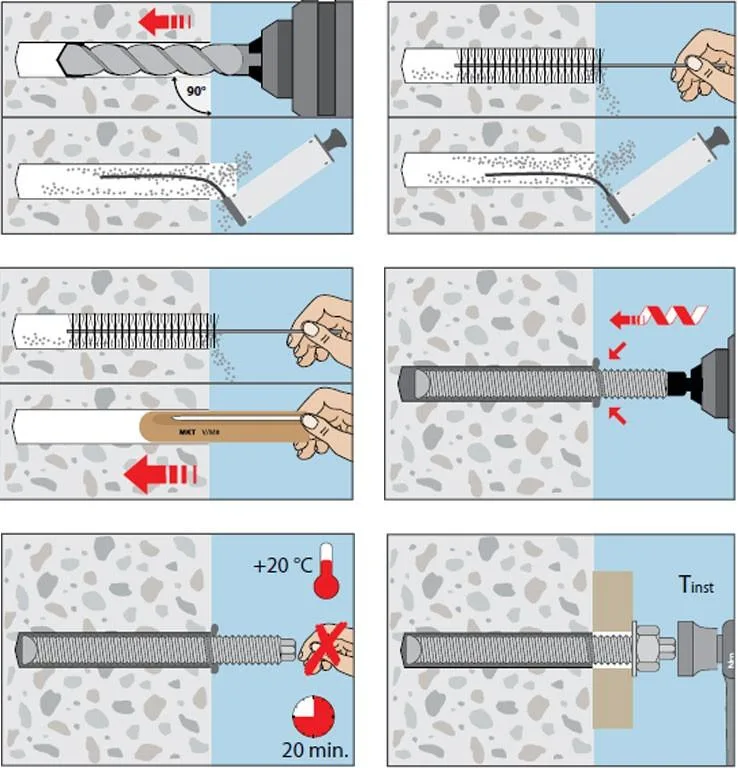
During installation, first drill a hole in the concrete according to the specified diameter and depth.
After drilling is completed, dust and debris inside the hole must be thoroughly removed.
Then inject the chemical anchoring adhesive into the hole, and insert the threaded rod or rebar.
During the resin curing process, the chemical material fills the space between the anchor rod and the borehole wall.
After complete curing, a stable bonded anchoring system is formed.
In simple terms, its working process can be summarized as:
Drill hole → clean hole → inject adhesive → insert anchor rod → wait for curing → install and fix
Why is hole cleaning so important?
Concrete dust remaining after drilling can affect the bond between the resin and the borehole wall.
If the hole is not cleaned thoroughly, even if a high-performance chemical anchoring adhesive is used, the actual anchoring effect may be reduced.
Therefore, in engineering installation, the following is usually required according to product requirements:
Blow dust → brush hole → blow dust again
The hole cleaning step is a very critical part of chemical anchoring construction.
What are the characteristics of chemical anchors?
Chemical anchoring systems usually have the following characteristics:
Higher anchoring capacity
After the resin cures, it can form a stable connection between the anchor rod and the substrate.
Lower expansion stress
Chemical anchoring mainly relies on bonding rather than purely mechanical expansion for fixing, so it has advantages in some scenarios with small edge distances or limited anchor spacing.
Suitable for threaded rods of various specifications
Anchor rods of different diameters, lengths, and materials can be selected according to engineering design.
Suitable for non-standard and engineering projects
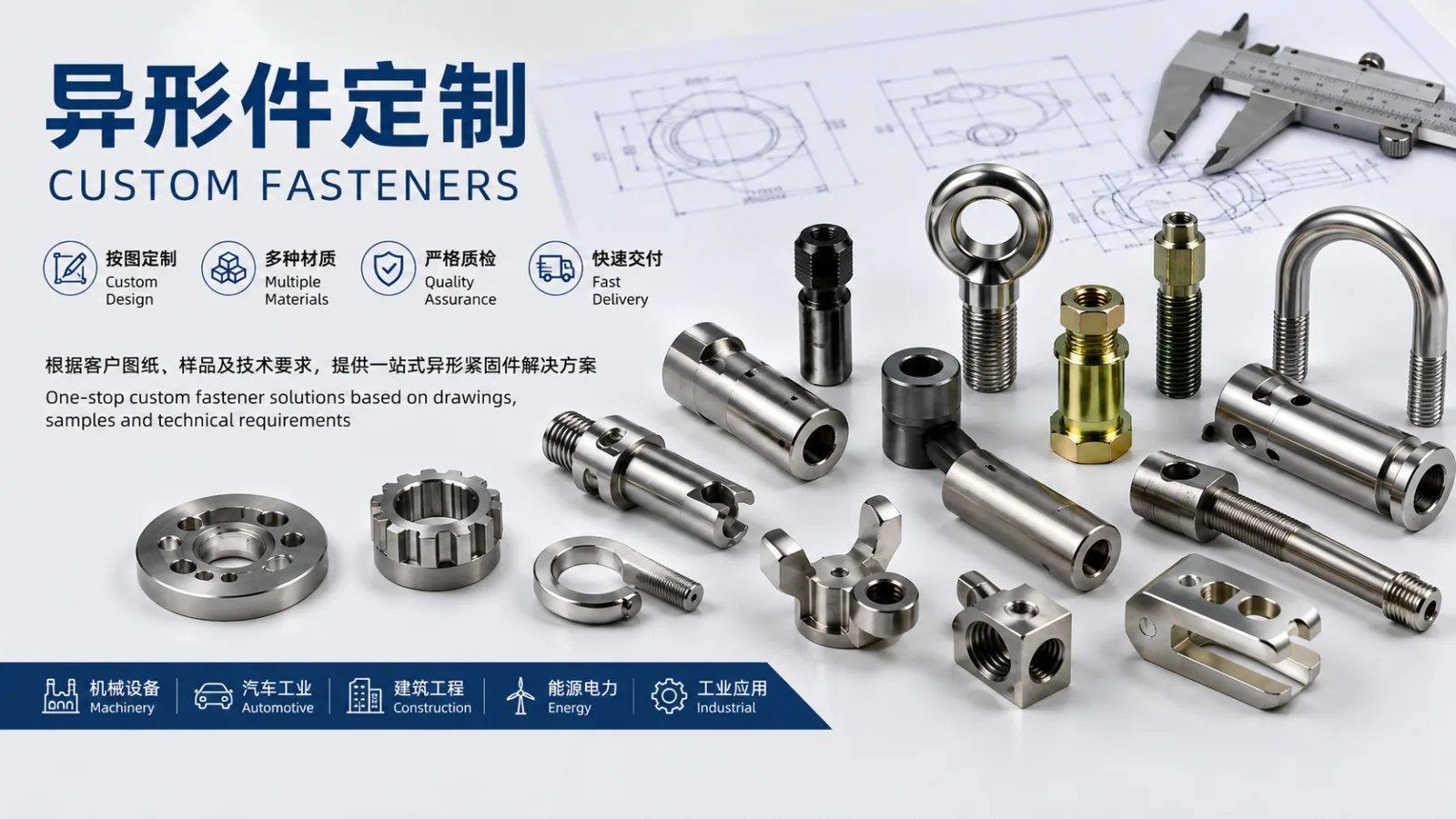
Anchor rod length, material, strength grade, and surface treatment can be selected according to project requirements.
Common application scenarios
Chemical anchors are widely used in buildings, industrial equipment, and steel structure engineering.
Common scenarios include:
1. Steel structure installation
Used for fixing steel column base plates, steel beam connectors, and other steel structure components.
2. Mechanical equipment fixing
Suitable for installing large equipment bases, production line equipment, and industrial machinery.
3. Concrete post-installed rebar
Can be used for post-installed rebar and strengthening projects in concrete structures.
4. Curtain wall and building component fixing
Can be used for installing some curtain wall brackets, metal components, and building connectors.
5. Heavy-duty engineering fixing
Suitable for industrial and building anchoring scenarios with high load-bearing requirements.
6. Guardrails, brackets, and piping systems
Can be used for railings, steel brackets, pipe supports, and mechanical and electrical equipment support systems.
What should be noted during installation?
The actual load-bearing capacity of chemical anchors depends not only on the anchor rod itself, but is also affected by many factors.
Including:
Concrete strength
Drilling diameter and depth
Degree of cleanliness inside the hole
Anchor rod diameter and embedment depth
Type of chemical adhesive
Ambient temperature
Curing time
Anchor edge distance and spacing
Therefore, in important projects, selection and installation should be carried out according to design requirements, product technical data, and relevant construction specifications.
Curing time cannot be ignored
After the chemical anchoring adhesive is injected, it needs a certain amount of time to complete curing.
The lower the temperature, the longer the curing time required by some resin systems may be.
Before the resin is fully cured, the design load should not be applied in advance.
The specific curing time should be based on the technical parameters of the chemical anchoring product used.
What is the difference between chemical anchors and mechanical expansion anchors?
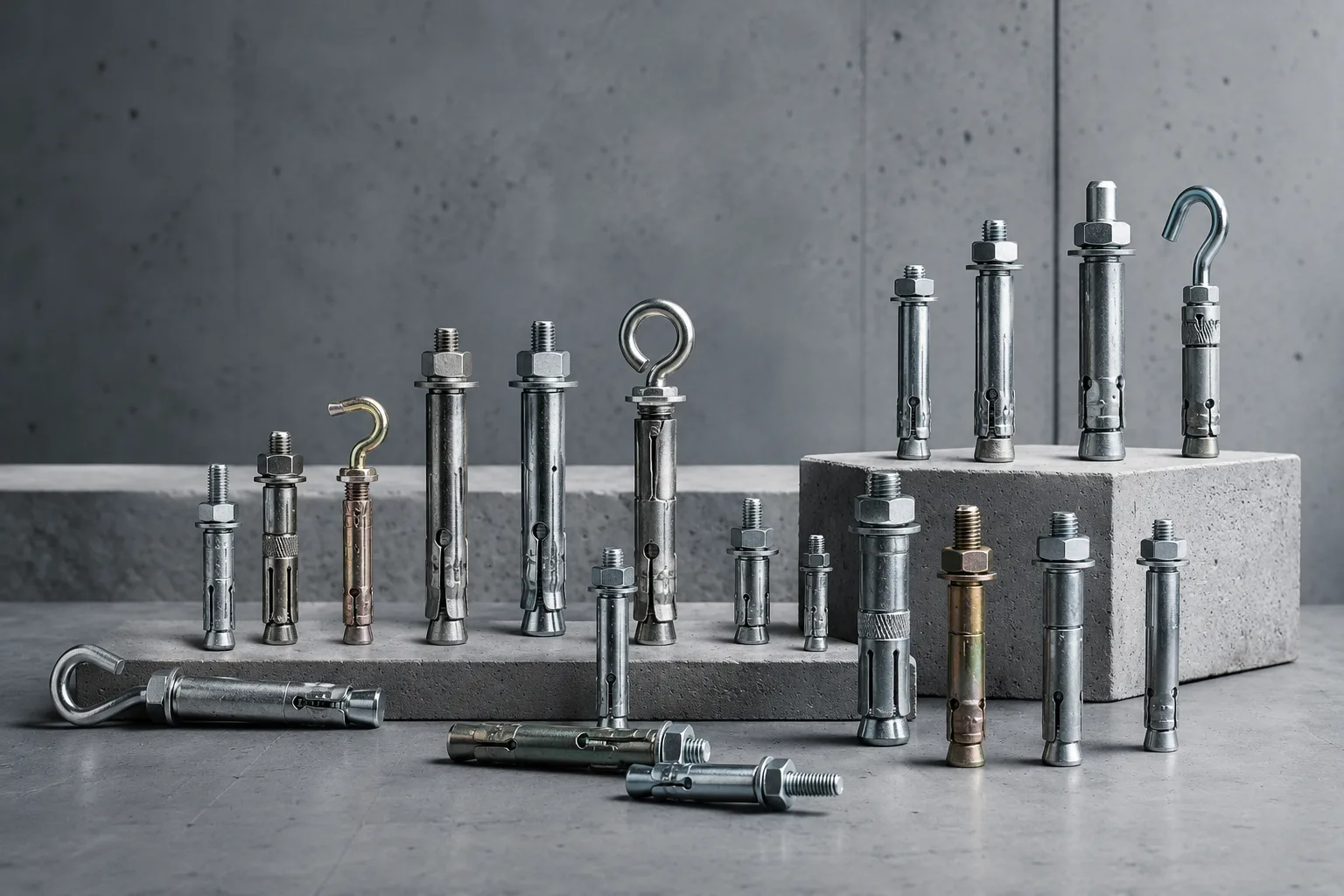
Mechanical expansion anchors usually generate mechanical interlock through a cone, sleeve, or expansion clip.
Chemical anchors mainly form fixation through:
bonding between resin + anchor rod + substrate
There is no absolute good or bad between the two types of products; they should be selected according to:
load requirements, substrate conditions, edge distance, installation environment, and engineering design
to choose the appropriate anchoring method.