Rivet Nut Grip Range and Hole Size: What Buyers Need to Check
Choose rivet nuts by actual sheet thickness, grip range, hole geometry and tool setup. Learn what an RFQ needs before approving a thin-sheet assembly.
A rivet nut RFQ that says only “M6” or “M8” leaves several fit questions unanswered. How thick is the material at the installation point? What shape is the hole? Is there room behind it? The thread identifies the mating screw. The grip range and mounting hole determine whether the insert can stay properly seated in the panel.
Grip range starts with the material being riveted
A rivet nut deforms during setting to clamp the workpiece from behind. Its grip range is the thickness interval that the particular design can accommodate. It is not the nut's overall length or the length of the screw fitted later.
For two sheets held tightly together, tell the supplier the combined thickness and the material of each layer. An air gap is not solid grip thickness. A bracket attached later by the mating screw does not automatically belong in the riveted stack. Coatings, formed areas and sheet tolerances can affect the actual stack, so samples should represent the production condition.
Thread size does not specify the mounting hole
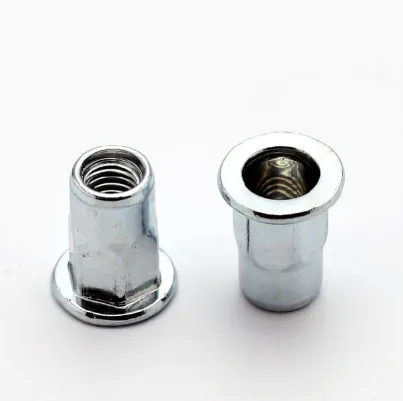
Round, knurled, half-hex and full-hex bodies can require different holes even when the internal thread matches. Use the chosen part drawing to define the hole diameter or width across flats and its tolerance. Do not select a drill simply from the mating screw diameter.
AUTORIV's full-hex rivet nut data lists thread, grip range, head dimensions and pilot-hole dimensions separately. That distinction belongs in a purchasing specification: identify the complete insert, not just its thread. The numerical values in that table belong to the listed products and should not become another supplier's manufacturing requirements by default.
One-sided access still requires space behind the panel
A rivet nut provides a thread where an ordinary nut cannot easily be placed behind the sheet. Its body and formed section still occupy space. Check both the insertion envelope and the space needed after setting in a closed tube, narrow cavity or assembly with internal components.
Böllhoff's blind rivet nut overview describes creating threaded connections in thin-walled parts from one side. On the accessible face, the flange also affects how the mating bracket sits. If a flush finish matters, specify the permitted projection on the drawing.
Keep the sample when an insert spins
An insert that turns with the screw is not automatically a case of insufficient tightening. Start with measured hole dimensions, burrs and actual sheet thickness, then check the insert design, setting tool and setup. Increasing setting force cannot be assumed to correct an unsuitable hole or grip range.
Retain the failed assembly, unused parts from the same batch and the setting record. Ask which installed dimensions and thread checks the supplier recommends, then validate the assembly using representative workpieces. Setting values for another brand, body style or material may not apply.
Make the RFQ useful for sample evaluation
Send the panel material, thickness and tolerance, hole drawing, thread, head requirement, requested insert material and finish, setting tool, quantity and packaging. If spin resistance, push-out resistance or thread load capacity is an acceptance requirement, agree on the test method and pass criteria.
See WT Bolts' rivet nuts. A hole drawing and sheet-thickness details make the part easier to assess than a front-view photograph alone. Dimensions, material, installation data and supply terms are confirmed against the enquiry.